Unisexual Ambystoma

Unisexual Ambystoma
Showing posts with label video. Show all posts

Sunday, September 28, 2014

What's Going On in Science, September 2014


Why student evaluations of teaching are worthless
"The paper compared the student evaluations of a particular professor to another measure of teacher quality: how those students performed in a subsequent course. In other words, if I have Dr. Muccio in Microeconomics I, what's my grade next year in Macroeconomics II?
Here's what he found. The better the professors were, as measured by their students' grades in later classes, the lower their ratings from students."


"This class should start an hour later in the morning. Also, the
teacher shouldn't wear sandals."
This NPR article summarizes a new study that tackles a problem that teachers in academia would love to talk your ear off about: teaching evaluations are horribly broken. If you get high scores from students in teaching evaluations, are you a good teacher? Maybe, but probably not. I've noticed the phenomenon of teaching evaluations (like product reviews on Amazon) consisting of only the most extreme opinions resulting in teachers who just don't care about the feedback.


Wildlife is culture, and culture deserves your tax money
"I mostly write about wildlife. So here is how it typically happens for me: A study comes out indicating that species x, y and z are in imminent danger of extinction, or that some major bioregion of the planet is being sucked down into the abyss. And it’s my job to convince people that they should care, even as they are racing to catch the 7:10 train, or wondering if they’ll be able to pay this month’s (or last month’s) rent."

This lovely New York Times Opinion eloquently states why biologists constantly have a lingering pressure to justify their research in terms of benefits to humans. 


Understanding genetics for the future of medicine
"Various efforts are underway to interpret mutations and compile them in publicly available databases; one of the latest is an online registry to which patients can upload their own data. Eventually, they will be able to see how many other people have the same mutation, and how many get cancer."

Genetic testing is becoming a more and more prominent aspect of individualized medicine. Unfortunately, the pace at which genetic tests are increasingly used is racing ahead of the general understanding of genetic tests and how to interpret them. Until better education about traits, alleles, and heritability can permeate into the public, doctors will continue to be limited by their ability to educate their own patients.


Salamanders: forest vacuum cleaners
"On an average day, a salamander eats 20 ants of all sizes, two fly or beetle larvae, one adult beetle and half of an insect called the springtail. And in doing so, they collectively affect the entire course of life in the forest — and perhaps far beyond."

This article is from back in April of this year, but I can't leave a nice salamander study out in the cold on this blog. You may not see them, but in most woodlands in North America, there are salamanders that make big differences in how ecosystems manage nutrients. While they make look cute and cuddly, salamanders are ultra-efficient, insect-seeking torpedoes:



Sunday, October 27, 2013

TANK


As if he were making art just for my interests, Nate Milton presents this animated short film, "TANK"

This beauty is well worth nine minutes of your life, especially if you were anything like me growing up: chasing creepy crawly creatures and playing junior naturalist. I don't think I've ever seen anything that has so accurately tapped into the magical feelings that surround connecting with the natural world as a child, feelings that certainly still resonate with me as an adult.

This film was the results of a successful Kickstarter campaign and you can see more behind-the-scenes videos/photos on Mr. Milton's production blog. Go give his website some love for his awesome work.

Friday, October 18, 2013

Science links: Science Studio educates, entertains, and inspires

Whew, I've been away from the blog for a bit while I finished my PhD candidacy. Now that I've been deemed a competent scientist by my senior colleagues, I have a backlog of blog posts to get to.

I'm going to start by pointing you towards Science Studio, a collection of the best science multimedia on the web. This idea comes from Rose Eveleth and Ben Lillie, who are two people behind the equally excellent podcast Story Collider


So, why is Science Studio cool? Well, finding really good science media isn't easy. Unfortunately, the best and most effective science multimedia isn't easily accessible via traditional outlets like television anymore.
 
No no no, Discovery, what is this?
Wait, really? Awww dagnabbit

Fortunately, the internet is still a source of so much great science media. It is also the source of so much terrible, pseudo-scientific poo. So if you are a science-seeking human with a limited amount of time to scour the internet, what do you do? Sites and programs like Science Studio could be the answer: nominate really good science media, have people judge it for its quality, and display the results in an easily accessible way. 

So go check out Science Studio for yourself. Here are some of my favorites from the collection:

Some days I'm Jad, some days I'm Robert.

One of the first science podcasts I always mention to folks is WNYC's Radiolab. While this podcast might not always satisfy those who seek for hardcore science, the stories are always entertaining and Jad and Robert make one of the best radio teams you can listen to. Their episode "The Bad Show" displays prominently on top of the Science Studio collection.


Look at this video explaining DNA folding from the blog The Last Word On Nothing. I was so enamored by how simple and whimsical this video is while so accurately and clearly presenting a very complicated topic.


Here is a neat podcast that I had never heard of, One Species at a Time. This one is about an under-appreciated group of species: moths. This is delivered by Ari Daniel Shapiro, who you might have heard all over the radio talking about cool science.

Cutest organism alive

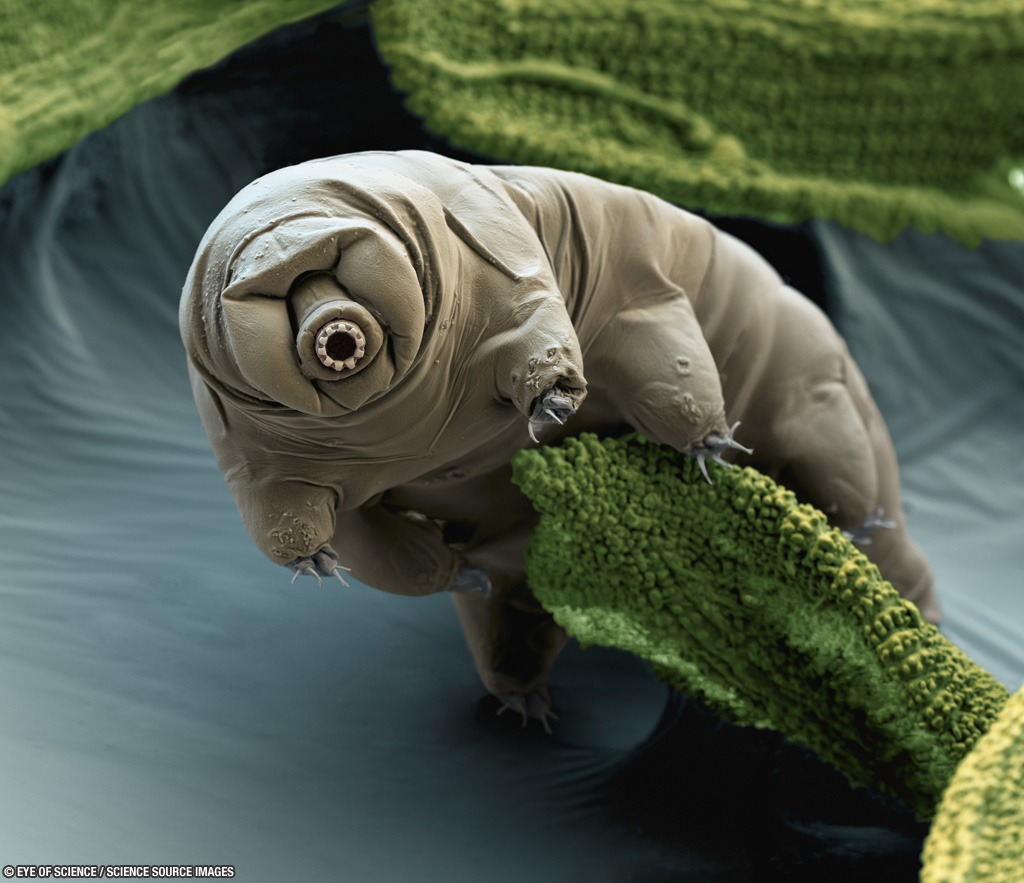
Next, an informative and concise video about Tardigrades from the YouTube channel SciShow. I told my students that the Tardigrade is my spirit animal and they seemed impressed.

Go check the rest of the collection out for yourself and support good science media!

Thursday, June 13, 2013

Chased by a Robot Cheetah

Charismatic animal? Check.
Neat gadgets? Check.
A revealing look into something previously un-observable? Check.

Oh boy, we've got ourselves a Nature paper brewing.
Credit to Martin Heigan (left) and Richard Ashurst (right)


A study published in the journal Nature led by Dr. Alan Wilson shines a light on why the way cheetahs move is so interesting. By using collars with some very fancy devices that measure how the animals change speed and direction, the research team showed that even though cheetahs are the fastest land animal on Earth, their ability to stop is what really catches dinner.

The collared cheetahs displayed some of the highest values for acceleration, deceleration, and centripetal acceleration (commonly explained by G-force) that have been measured in wild animals. Check out more in-depth info from the press stories at NPR and The New York Times. The bottom line is this: cheetahs don't move like dragsters or Usain Bolt, they move like F1 race cars.

As an added bonus, I was exploring Dr. Wilson's webpage and found out that he has collaborated with Boston Dynamics in designing a cheetah robot:


My love for these videos of strange robots is only equaled by my love for how hard the make me laugh. I feel like this will quickly change as we get closer to a robot apocalypse. 


Monday, June 10, 2013

Beer as a Metaphor for Biodiversity

Check out this great video from MinuteEarth that compares the dynamics of plant communities to the economics of beer. Sounds strange at first, but ends up being a great way to explain the importance of biodiversity to an economics major who is taking there required biology course.

Check it out:


Make sure to take a look at MinuteEarth's other videos on youtube and connect with them on Facebook and Twitter