Unisexual Ambystoma

Unisexual Ambystoma
Showing posts with label teaching. Show all posts

Friday, October 18, 2013

Science links: Science Studio educates, entertains, and inspires

Whew, I've been away from the blog for a bit while I finished my PhD candidacy. Now that I've been deemed a competent scientist by my senior colleagues, I have a backlog of blog posts to get to.

I'm going to start by pointing you towards Science Studio, a collection of the best science multimedia on the web. This idea comes from Rose Eveleth and Ben Lillie, who are two people behind the equally excellent podcast Story Collider


So, why is Science Studio cool? Well, finding really good science media isn't easy. Unfortunately, the best and most effective science multimedia isn't easily accessible via traditional outlets like television anymore.
 
No no no, Discovery, what is this?
Wait, really? Awww dagnabbit

Fortunately, the internet is still a source of so much great science media. It is also the source of so much terrible, pseudo-scientific poo. So if you are a science-seeking human with a limited amount of time to scour the internet, what do you do? Sites and programs like Science Studio could be the answer: nominate really good science media, have people judge it for its quality, and display the results in an easily accessible way. 

So go check out Science Studio for yourself. Here are some of my favorites from the collection:

Some days I'm Jad, some days I'm Robert.

One of the first science podcasts I always mention to folks is WNYC's Radiolab. While this podcast might not always satisfy those who seek for hardcore science, the stories are always entertaining and Jad and Robert make one of the best radio teams you can listen to. Their episode "The Bad Show" displays prominently on top of the Science Studio collection.


Look at this video explaining DNA folding from the blog The Last Word On Nothing. I was so enamored by how simple and whimsical this video is while so accurately and clearly presenting a very complicated topic.


Here is a neat podcast that I had never heard of, One Species at a Time. This one is about an under-appreciated group of species: moths. This is delivered by Ari Daniel Shapiro, who you might have heard all over the radio talking about cool science.
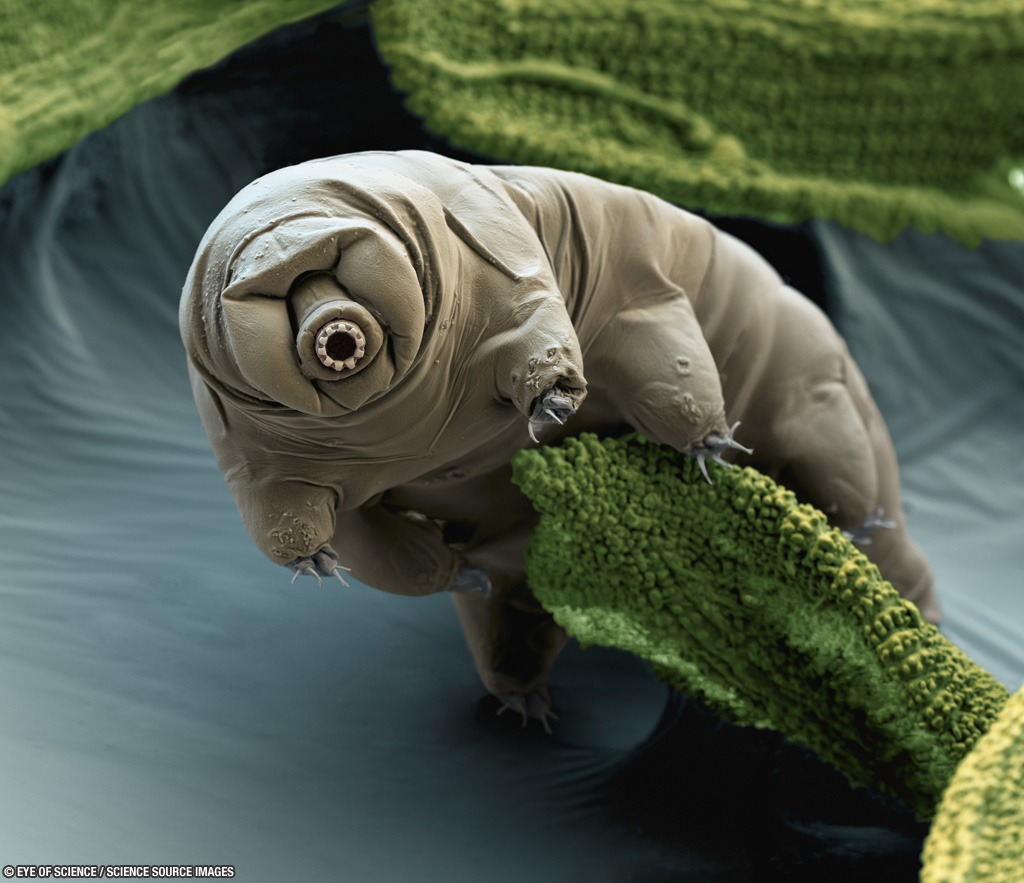
Cutest organism alive

Next, an informative and concise video about Tardigrades from the YouTube channel SciShow. I told my students that the Tardigrade is my spirit animal and they seemed impressed.

Go check the rest of the collection out for yourself and support good science media!

Monday, June 10, 2013

Beer as a Metaphor for Biodiversity

Check out this great video from MinuteEarth that compares the dynamics of plant communities to the economics of beer. Sounds strange at first, but ends up being a great way to explain the importance of biodiversity to an economics major who is taking there required biology course.

Check it out:


Make sure to take a look at MinuteEarth's other videos on youtube and connect with them on Facebook and Twitter

Monday, May 27, 2013

How do you make science interesting? Make it rhyme and drop a beat.

In general, it is very hard to get people to care about science. I don't want to force a history major to change his degree to bioengineering. I don't need a six year old to sign a contract detailing her commitment to being the next Nobel prize winner. I'm talking about just getting someone (anyone!) who isn't already a scientist to recognize that science exists, science matters, and science can be cool.

I watched this incredible video produced by the Royal Society for the Encouragement of Arts, and one point in particular stuck with me for the last week. Most of the stuff I teach to students is boring. It really is. 

I've been on both receiving ends of this exchange.

However, I find science fascinating. So, like my other teaching colleagues, I have found myself bewildered when students don't agree. Then I think about my mindset when I was taking the same classes. I have never been excited by basic facts. I am always excited to learn about how facts connect to tell stories.

Boring: DNA is a long polymer of nucleotides
Interesting: The composition of human DNA reveals that humans mated with neanderthals thousands of years ago

But if you want to make cool connections and form interesting questions, you have to have a least a working understanding of some facts. And in a time where everyone's attention span (including mine) lasts roughly 1-2 minutes, facts need to be presented more effectively than bulleted points on a PowerPoint presentation.

That leads me to my main point: Can I take a minute to talk about how cool GZA is?

Photo provided by Mika photography
GZA is one of the founding members of the WuTang Clan, one of the most prolific and important hip-hop collectives of all time. You may already know that about him. What you may not know is that he is a science advocate and all-around fascinating guy.

In my dream world, the sciences are intriguing to everyone. I would imagine painters and musicians coming into the field with me to be inspired by the annual explosion of life from vernal wetlands. I would imagine prominent scientists and popular musicians working with Hollywood filmmakers to produce beautiful documentaries about the natural world. I would imagine hip hop artists walking down the halls of M.I.T., researching their next album. 

Of course, these are imaginary for now. Except the last one. That one is true.

GZA is doing just that. He’s writing albums based on physics and biology. His upcoming album “Dark Matter” will no doubt be incredible. In the words of the man himself, "There's no parental advisory, no profanity, no nudity, the only thing that's going to be stripped bare is the planets." 
I’m sold.

The above links are from last year, but we only have to wait until this summer to listen to GZA's scientific treatise. BUT, my google news alert for "GZA" made sure that I received this video preview:


Writing a hip-hop album about science is cool. But let me show you something even cooler that GZA is involved with. It is called the "Science Genius B.A.T.T.L.E.S." program, a collaboration between Columbia University's Chris Emdin, New York City public Schools, and GZA himself. 

Please watch this great video story about the program from PBS news hour:


While I probably won't be rapping in my classrooms anytime soon, this is a great reminder of why striving to make science education better is a basic component of making science better for everyone.


claimtoken-51a796f682bf1

Sunday, July 29, 2012

Southwest Dreamin'

Greetings all!
Gila Monster (Heloderma suspectum) about to say something important.
I haven't posted on this blog for close to a month due to general busyness and time spent traveling. The purpose of my recent traveling has been to make it out to Portal, AZ to help out with the field herpetology class taught at the American Museum of Natural History's Southwest Research Station. This has been my first time west of Yellowstone National Park, and oh boy I have had a fantastic time so far.

My labmate Matt Holding demonstrating how to safely handle venomous snakes for research purposes.

We have students from all over the U.S. from all walks of life here to learn about the Southwest's herptofauna. So far they have traversed some gnarly habitat, caught some incredible creatures, and memorized scientific names like it was their job.
Western Diamondback Rattlesnake (Crotalus atrox)

I've been very fortunate to help out with the course this year not only for the reptiles and amphibians, but also to connect with some great scientists that are here to teach and share their research. Unfortunately (fortunately), I have been very busy and don't have much time to update this blog. For now I will drop some photos for your enjoyment and wonder.
Mountain Patchnose Snake (Salvadora grahamiae) showing off its wonderful rostrum

The threatened Twin Spotted Rattlesnake (Crotalus priceii) only habits talus slopes that promote me falling down a lot.

People think I'm dumb, but my favorite desert herp is the Sonoran Desert Toad (Incilius alvarius)

A juvenile Green Rat Snake (Senticolis triaspis) makes for an extremely photgenetic animal


From here, I'll be heading up to California briefly before flying to Vancouver, Canada for the World Congress of Herpetology. After that , it is back to the (relatively) real world. Being a scientist is fun.

Look for more pictures and (maybe) stories to come!