Unisexual Ambystoma

Unisexual Ambystoma
Showing posts with label Scifund. Show all posts

Thursday, August 7, 2014

First publication from SciFund support

The reason I started this blog two years ago was to connect to those who helped fund my science through the SciFund Challenge. Crowdfunding has come a long way, even since then, and I hope that my funders have been able to check back time and again to see how my PhD is progressing. However, after the t-shirts were sent and the thank-yous were written, I haven't shown much about the salamander for for which I was so graciously supported by a group of science-loving citizens.

One thing that is difficult to appreciate about science: it takes a long time. Creating new knowledge is tough. From generating new ideas to collecting and analyzing large amounts of data to having your work evaluated by your peers, even small projects can take years until the product of all that work is produced. 

I'm thrilled to finally have the first scientific publication resulting from crowdfunded support officially in press. The paper is titled "Evolutionary basis of mitonuclear discordance between sister species of mole salamanders" appeared in volume 23 (issue 11) of Molecular Ecology. If you take a look at the acknowledgements at the end of the paper, there is a specific sentence where I send my thanks to all of those who funded my work through SciFund. How cool is that!

The data that was collected for this project was done while I was in the field working on the Ambystoma dispersal project, and my Scifund support was much appreciated during the associated travel across the state of Ohio.

So, that sounds nice, but what is the science?
One thing we noticed when looking at the salamander samples that we had from all across Ohio: some of the species of salamander were showing up in weird places. Particularly, these two sweethearts:


The salamander above on the left is only found in the very southwest of Ohio and is mostly located in Eastern Kentucky. The reason? The Streamside Salamander loves to breed in small streams that don't have fish. In contrast, the Smallmouth Salamander, which is found over most of Ohio and across a wide part of the central United States, only lays its eggs in ponds and other wetlands that aren't streams. 

Here are some of the areas we find these two salamanders ("sympatry" just means they are found in the same county):

BUT, when we used DNA to identify the samples we had from across Ohio, we identified many animals as Streamside Salamanders that we were almost sure were actually Smallmouth Salamanders. 


See all that green in the middle of Ohio? That didn't seem right.

We found these animals in ponds (not streams) and they were well outside of the above range of Streamside Salamanders. Since we only had DNA samples, how could we figure out what was going on?

Because we were using tiny pieces of DNA from the salamanders' mitochondria, there were three main explanations for this unexpected pattern:

The kidney bean thing is suppose to be a mitochondria!

So, we could be observing 1) a misidentification of the central Ohio salamanders or 2) the presence of mitochondria from one species inside the other species (weird!) or 3) hybridization between the two species.

We used DNA collected from both the mitochondria and nuclear DNA of salamanders from all across the state to show that mitochondria inside of the Smallmouth Salamanders in central Ohio are invaders from the Streamside Salamanders, a biological process called mitochondrial introgression

Mitochondrial introgression happens when two species hybridize at some point in time and the mitochondria that comes from the female of one species becomes abundant in the other species, either by natural selection or random chance. As strange as it sounds, the phenomenon is well-recognized and has been identified in a diverse group of animals. 


So why is our publication important? 
First, we solve the mystery of finding salamanders with strange DNA by using a bunch of different genetic techniques. Our methods show the pros and cons of the different ways that scientists have tried to study mitochondrial introgression in the past and provides a guide for how to use these techniques.

Yellow-Rumped Warbler
Second, we took a look at all of the locations where we find salamanders with mismatched mitochondrial DNA and found that these wetlands are located in places with significantly higher rainfall during the spring and summer. This could be a sign of an adaptive link between the foreign mitochondria and a wetter environment.

Making the links between patterns of foreign mitochondria and their adaptive advantages is important and finally becoming common. Other recent publications like ours have shown both advantages (in Warblers) and disadvantages (in Long-Toed Salamanders) to having an introgressed mitochondria. Using genetic information, scientists are finding out what evolutionary processes are happening hidden from sight inside the animals of our backyards. Pretty neat.
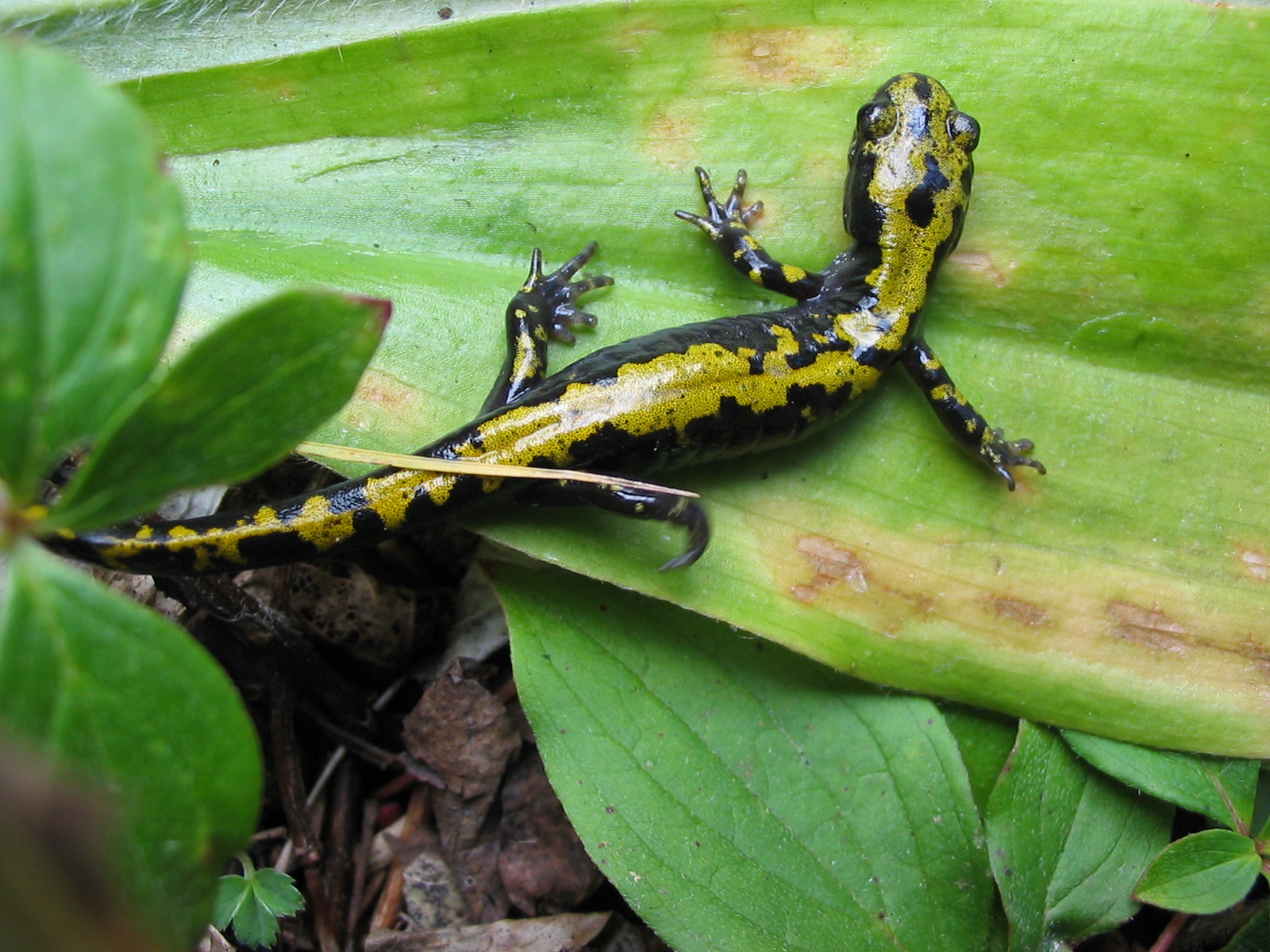
Long-Toed Salamander


Thursday, June 6, 2013

What I've learned about outreach

This past week was the last week of the first Scifund Online Outreach Class, in which more than a hundred scientists and educators from around the world got together to improve their outreach skills. I was excited to participate in the class, and ended up enjoying it more than I ever expected.

My former advisor, Stephen Richter, identifying stream insects with local biology teachers.

Science outreach is loosely defined as any activity that raises the public's awareness of science. Unfortunately, that definition is a little too simplified. The "public" are a bunch of people: kindergartners, moms/dads, police, politicians, and retirees sitting on the beach in Florida. All of these groups have different values and a different perception of science, but in some way or another, science matters to all of them. 

Some scientists, including myself, think that there is a big disconnect between  scientists and the public. Unfortunately, scientists can tend to point a finger at the public for having a negative attitude towards science. In a study led by Dr. Elaine Ecklund from Rice University, a quarter of surveyed scientists suggested that the attitude of the public is the main difficulty in science outreach. In contrast, one graduate student interviewed in the study stated that she thinks the public views scientists as "snobby intellectuals making a judgement on high". 

I'm fortunate to be a scientist, and I believe that part of my job should be sharing my science with the public. I get the feeling that most scientists have historically viewed this outreach as optional or even frivolous. However, some scientists are suggesting that science outreach is quickly going to become a necessary part of keeping your research relevant, productive, and funded.

With that in mind, here are the four most important things I learned from five weeks of outreach training with some of the most interesting scientists in the world:

1. You should be able to explain your research to anyone, no matter how complicated.

"You see that new paper about experimental
Markov chain Monte Carlo simulation methods 
for phylogeny reconstruction?"
"Uh.What?"
Most scientists have extremely narrow areas of expertise (I like Matt Might's explanation here). When you have studied a single area of science for years, you are standing on a gigantic heap of prior knowledge. This prior knowledge makes it possible to come up with ideas that are new to science, but also makes it easy to forget that most folks have no idea what half the words mean in that scientific article you are reading.

The solution to this problem seems to be getting practice putting yourself in your audience's shoes. Sounds easy right? 

Imagine you are explaining what you study to a bunch of 10-year-olds. What if I told you you can only use the 10,000 most common words in the English language? Try it!

Here is what I came up with to explain salamander genetics:
"I look at animals with four legs and wet skin. These animals are made of tiny parts that hold something that is like a book. The letters in these books make the way the animal looks, moves, and eats. I study how these wet skin animals share their books and letters with their babies."

That sounds pretty bad, but it sure is good practice! 

Beyond knowing your audience, it helps to refine your message. Science is complicated, but just focusing on a single idea or message can vastly improve your ability to communicate. My eyes have glazed over listening to other scientists (in my own discipline!) describe every detail of their research, and I've learned that focusing on a single idea makes things a lot easier. One method we learned to combat this is the message box from Nancy Barron's book Escape from the Ivory Tower


2. New technology makes for new ways to connect.

Connecting to people all over the world is easier than ever thanks to the internet and social media. Twitter is a neat way to put small bites of science out there for the public, take part in a community of other scientists, and stay on top of what issues are being talked about in science. I learned more about Twitter through these slides by Jeremiah Osborne-Gowey and this paper by Holly Bik and Miriam Goldstein. 

Once you get past the "whoa, I don't understand this" phase of using Twitter, you can quickly learn how to do cool things, like chat with high school students about their science questions and take part in impromptu scientific peer review

Twitter is just one example of how scientists are using the internet to reach out. Blogs (like this one!) are important tools for scientists to connect with the public, along with comics, videos, and podcasts. Please do yourself a favor and check out those links for diverse, fantastic video interviews from some of the most influential folks in these areas. 

3. There are a lot of people who care. And they care a lot.

The biggest thing I took away from the outreach course was the number of amazing scientists and educators that I met in the process. Sometimes the most inspiring experience you can have is connecting with others who share your passions. I've learned that there are enthusiastic grad students, tenured university faculty, and K-12 teachers all around the world who are always thinking about how to communicate more effectively. Just knowing that other people are out there making a difference is a huge boost to my desire to do the same.

Google hangouts with scientists and educators, like Elaine Brewer, make practicing science outreach easy.

4. If you want to get started, then get started.

In my scientific career, I am almost always careful and slow. I plan experiments carefully, write and rewrite papers until I am satisfied, and read dozens of papers before I am comfortable weighing in on a topic. This usually makes for good science, but I don't think this approach always makes for good outreach. 

Everyone's time is limited, but if you care about something strongly enough, you make time. Grad students' weekends in the lab, professors' late nights perfecting classroom presentations, and teachers' many hours of preparing demonstrations are all testaments to making time for the things that you love. 

So if you care about sharing science, go for it. 

Start a blog. Tweet it up. Go to a school. Give a presentation. Don't be embarrassed of what you do and certainly don't be embarrassed of wanting to share your passion. 

I'm more than willing to look silly if front of a colleague if I can put this look on someone's face:


Thursday, May 23, 2013

Live slow and die old: why are we studying salamander cells?

The following post was written as part of a practice exercise for the Scifund Outreach Class. But it isn't doing any good hidden away, so here you go:
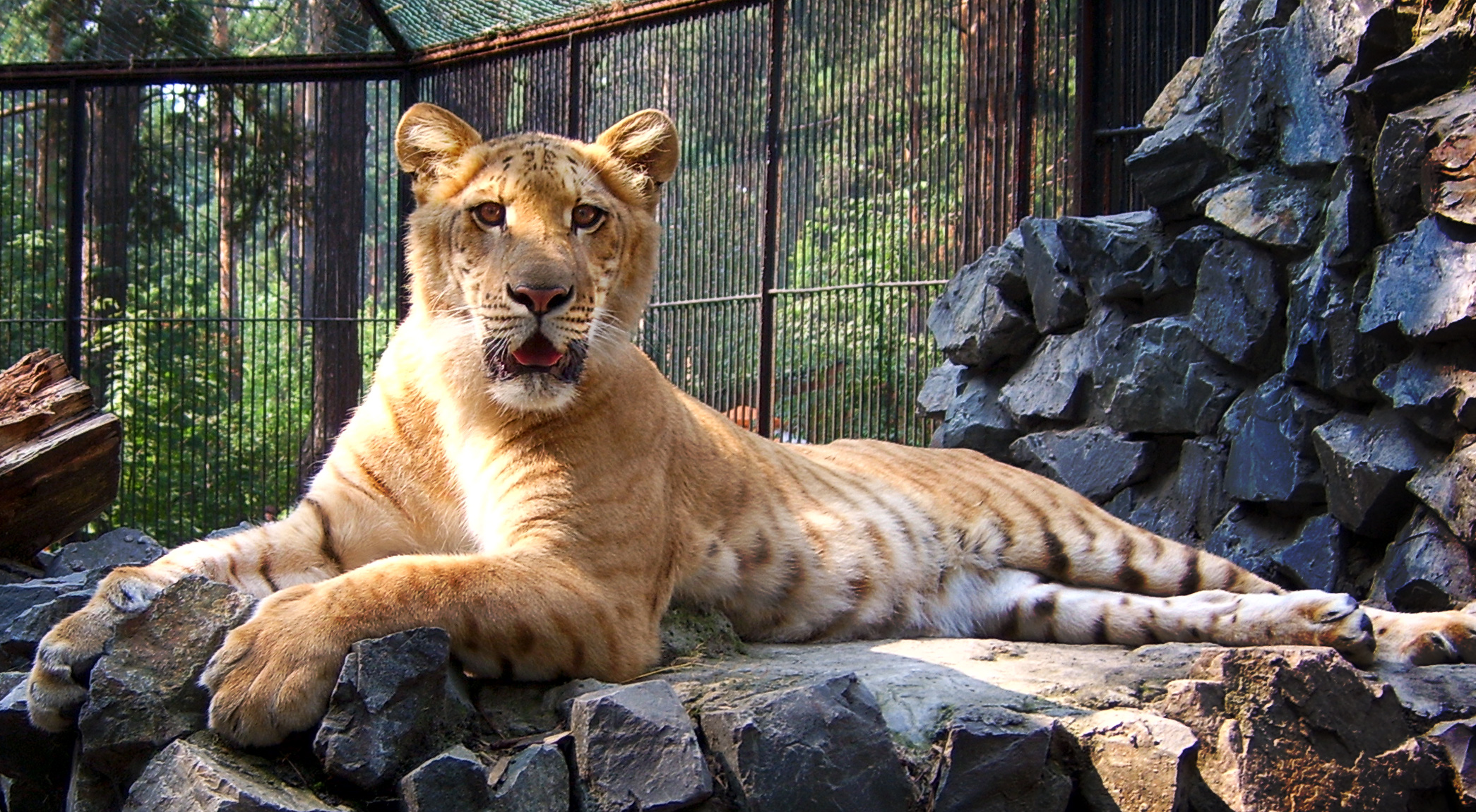
A few years ago, Ligers were all the rage. You remember Ligers don't you?
Here is a Liger looking right at you
Ligers, of course, are the result of a mating between a lion and a tiger. I predict that the reason a hybrid animal like a Liger is so captivating to you and me is that it causes the imagination to run wild. You can't help but think of wild combination of your favorite animals!

However, hybrids are rare. So why won't I ever see a "Growler Bear" (grizzly bear + polar bear)?


The process of evolution has produced many barriers to the creation of hybrids, but one of these barriers could hold the secret to an important question for humans: why do we age?


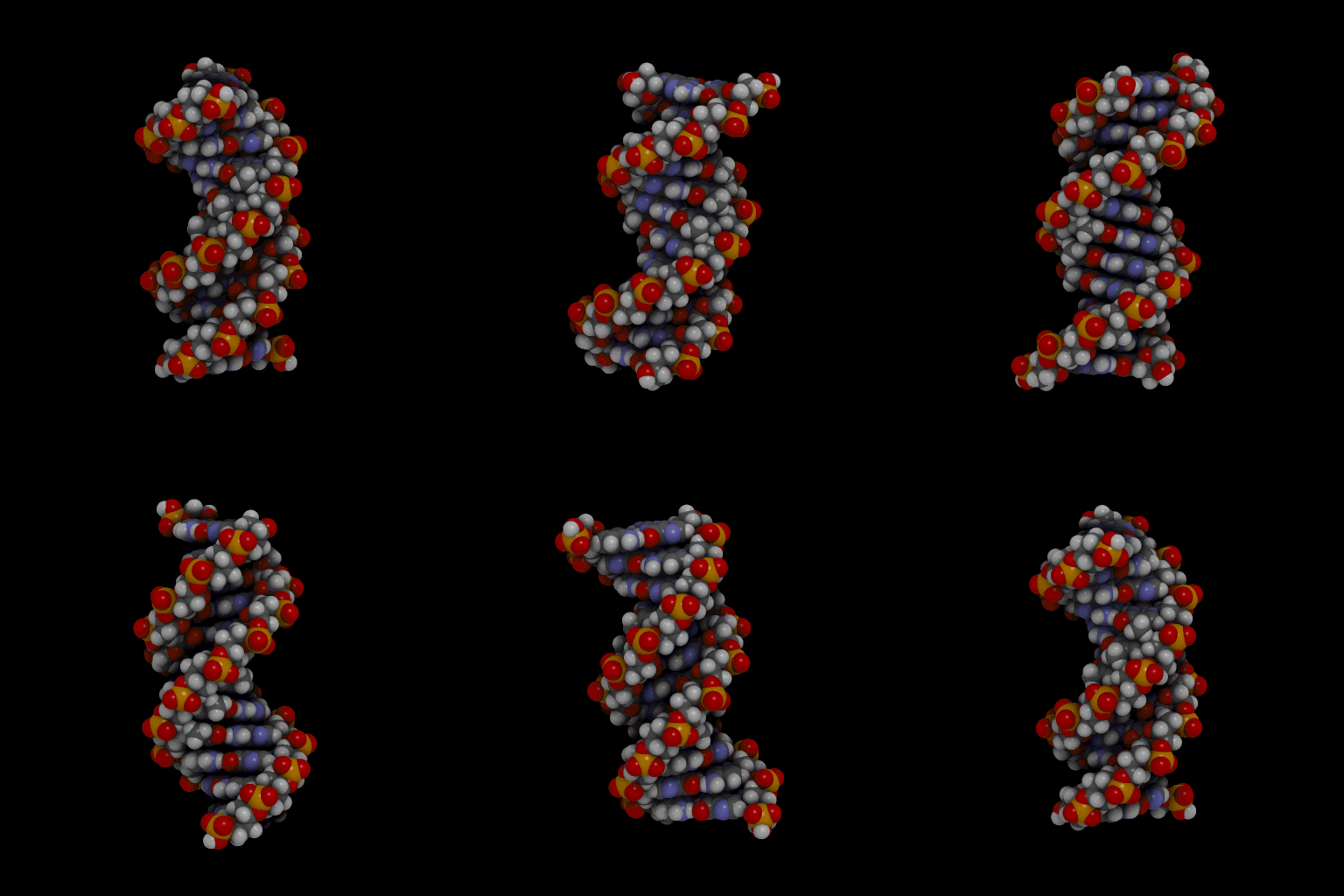
DNA: the answers are somewhere in there.You have to look close!
The key resides in the dual-nature of our DNA. Whether you like it or not, every cell in your body has two distinct sources of genetic blueprints: your mitochondria and your nuclei. These two components of your cells serve very different purposes. Your nucleus acts as each cell's command center by ordering the construction of the proteins that maintain your body and dictate its function. Your mitochondria are the power plants of the cell, constantly creating the fuel that keeps the body running. Each of these components has its own genetic blueprints, but in order for cells to work they must both play nice with each other.

It turns out that playing nice with each other is difficult. Because your mitochondrial DNA is always passed down from your mother and your nuclear DNA is always a combination of both parent's nuclear DNA, the two genetic libraries evolve at two different rates. And the more distantly related nuclear and mitochondrial DNA are from each other, the more difficult it becomes to communicate.

This mismatch is not only a giant barrier to hybrids, but also one of the major contributors to how fast organisms age. This idea is called the "pace of life": organisms with high metabolisms often have shorter lives.

Consider a hummingbird flapping its wings hundreds of times a minute. All that energy requires mitochondria to be pushed to their limits, increasing the pressure for perfect communication between nucleus and mitochondria.


The bottom line: humans would be very interested in how to maintain a healthy dance between their nuclei and mitochondria. We've recently identified an animal that can somehow maintain this dance against almost impossible odds:

An all-female Ambystoma salamander: avoiding cellular destruction while looking adorable.

This salamander is part of an all-female group in the genus Ambystoma. What makes these salamanders special is their ability to clone themselves while occasionally stealing sperm from other salamanders species. The result are cells with multiple copies of nuclear DNA from up to five other related species (imagine yourself with copies of chimpanzee, gorilla, and orangutan DNA). However, their mitochondrial DNA always remains the same. This mismatch of nuclear and mitochondrial DNA spells a recipe for cellular disaster, but these all-female salamanders are widespread and successful. How do they do it?

The first step in answering this question is to determine if these all-female salamanders do in fact overcome this mismatch. To do this, I am growing tissue from different salamanders and comparing the efficiency of their mitochondria. 

At least, I hope I am. I've convinced my committee that it is a pretty good idea.

Thursday, February 14, 2013

NPR and the progress of science crowdfunding

As I was on the way to work this morning, I heard NPR's science reporter Joe Palka doing a story about a very familiar theme: scientific crowdfunding.

The impetus for this blog was my crowdfunding campaign from last year's SciFund challenge, and has been only one example of how crowdfunding has affected my scientific career. I've had much more practice explaining why my research is interesting and important. I've learned how to incorporate principles of marketing and design into the way I present my work to other scientists and the public. The coolest perk of all? It has to be meeting people from around the world who donated to my work and have now become partners for the journey of a research project.

Christmas presents for my SciFund contributors: a photo of their adopted salamander, complete with genetic information.

And what do you know, it looks like crowdfunding might be catching on. The campaign that Joe Palka describes, uBiome, just raised over $250,000
That's gonna buy a lot of pipette tips.

I would have told you last year that it would be impossible for a science project to raise that much money. That is big time grant money. So whether a scientist is attempting a massive project like uBiome or a smaller project like mine, there are folks out there who are willing to open their wallets and support the greater scientific good. What's not to love about that?


Friday, November 30, 2012

SciFund Round 3: Jenn Hellmann

The SciFund challenge, a crowd funding experiment for science, is once again going strong this year. Since this blog started with my own SciFund campaign, it is only fitting that I use it to promote some of the fascinating research done by other students.

This funding cycle, there are three other students in my department at Ohio State who are sharing their science with the world and looking for members of the public to participate with them. One of these students in Jenn Hellman
Jenn looking for fish in all the wrong places.
Jenn's research centers around social networks in animals. Particularly, she observes the behavior of African Cichlid fish to better understand the interactions between individuals and groups. Why is this important? These relationships are complex, and the effects of how animals interact in a social network has massive influences on their evolution and ecology. 

Jenn is planning to use donation to fund an expedition to Lake Tanganyika, in East Africa, where she will be able to observe these animals in the wild. 


As part of her campaign, Jenn answered some questions about what she does, why she does it, and what makes her tick:

Tell us about yourself, where you are from, and where you see yourself going.
I'm a second year graduate student at The Ohio State University. I'm originally from Philadelphia, and I did my undergraduate at Messiah College. I took a year off before graduate school to work with kids and to travel, but I came to graduate school last year and I love it. I love being paid to do research and teach, and working in an environment where everyone is here to learn. Because of that, I would love to be able to work as a faculty member at a university eventually. 


Graduate student multitasking at its best.
How did you get involved in your research project?
I came to graduate school knowing that I wanted to do fish behavior, but I didn't know much more than that. I actually got into social networking by reading some of primate literature for a class. The article talked about how certain individuals in the group are responsible for maintaining group stability, and when you remove those individuals, the group gets really aggressive. Later, I was reading some articles about intergroup movement in colonies, and it just struck me that social networking is probably really important in this species too. Since some individuals have many more opportunities to interact with their peers than others, that probably has pretty significant effects on the decisions that they make. 

Why is your research important to you? Why should others fund it?
I think that sociality in general is fascinating and relevant. So many different species, from ants to humans, have evolved extremely complex social systems. Exploring the benefits of social networking can help us compare social systems between species and help us understand why they are so different. Why do ants live in huge colonies with one queen and many helpers, versus fish that cooperatively breed, versus primates that raise their offspring in groups? In all of these types of organisms, their social system is key to their survival and without it, they would not be successful in their environment. 


Exploring social networking is one of the best ways to understand social systems.  It tells us a lot about species: how they find mates, how they maintain social stability, and which individuals are most important in a group. It helps us understand how evolutionary pressures have caused species to adapt a certain way of living, and we can use this information for many things, such as improving conservation plans, anticipating how species will react to disturbances, and tracking the spread of diseases.

Do you have a favorite story that came from working on your research project?
I've had to learn how to SCUBA dive for this trip. The first practice dive that we took as a research group, I was using someone else's equipment and so my BCD (the vest that controls your buoyancy) was too big and the weights around my waist were too heavy. I spent about twenty minutes bobbing up and down between the surface and the bottom of the lake before I got out and fixed it. It was not my best practice dive! 

Why did you decide to particpate in the SciFund Challenge?
The purpose of SciFund is two-fold. First and most importantly, I want people to understand how science applies to their lives. There are all types of research happening that people don't know about and may not care about. I hope that SciFund can at least show people what type of research is out there, and make people interested in it. I think a lot of people see science as this unapproachable and hard-to-understand topic, but it's not if it presented in an understandable way. Second, I want to raise money to help fund my field season to Africa. My research is much more suited for field work than laboratory work (because of space constraints in the lab), but it's expensive to travel to Africa and I need some help!

What was the most difficult aspect of building your SciFund Proposal? What was your favorite? 
The most difficult was definitely the video. I also had to sit outside in 30 degree weather filming without a coat for about an hour, and then couldn't use the footage because of all the background noise. I've never done a video before (ironically, my brother was a film and sound production major), and I'm just lucky that there are programs out there that can help anyone make a movie. The best part was figuring out how to explain my project to the more general population, because it gave me the opportunity to really think about how it is so related to what we see in human society, even though they are 'just' fish. 


Tell us something random. Something funny. Something borrowed. Something blue.
Something random... okay, well a 'Philly cheesesteak' is not actually a Philly cheesesteak unless you are in Philly. You can call it a cheesesteak, but they are definitely not the same and not as good. Anyone from Philly will tell you that!

If you would like to donate to Jenn's SciFund campaign (I did!), go here.

Monday, June 4, 2012

SciFund Facts and Figures


Year two of the SciFund Challenge officially ended last Thursday and I was lucky enough to meet my goal with time to spare. This year, 75 total projects raised $100,345.00 for scientific research, solely through soliciting donations from the public.

I get pretty excited when I find a quarter, so I think that's a lot of money.

I've done my best to shower my donators with thanks, and I really do mean it. This was a neat experience that introduced me to crowdfunding and the details of advertising science to the public. I was amazed that I had folks donate to my project from all stages of my life: family, friends from undergrad, former colleagues, current colleagues, and new friends (I hope!). I was also struck by how frantic the work was to make a SciFund happen, particularly at the beginning of the project when I was investing quite a bit of time into Facebook, twitter, this blog, and email.

Like any scientific mind, I really couldn't wait to tabulate the stats for this process and visualize who my donators were, how much they gave, and when they chose to give.

Here is a timeline of my daily contribution amount over the month, directly reported by rockethub:
 

What is immediately apparent here is that I got two really large donations on the 8th and 16th, plus a number of smaller donations on the first day. All of the analyses of last year's data showed that projects that started well typically made the most money and more often reached their goal. I was pumped to accomplish this.

Overall, I welcomed 26 contributors that donated an average of $71.31. The range of donations was huge, going from $1 to $500 (woah!).  The most common reward was the customized SciFund project t-shirt, proving the age-old mantra that people love t-shirts.

Here is the breakdown between different types of contributors:

What was tricky about classifying my contributors was that the friend and colleague categories blend into one another. I know scientific colleagues who have become friends and friends who have become scientific colleagues. If we ignore that, the "friends" category bested my "family" and "colleagues" in terms of number of donations (7) and total contributions ($245.00). Those are pretty good friends, I think.

"Unknown" folks are individuals who I had never met before SciFund, and they represented the highest number of individual contributions (10), the highest amount of money donated ($1,184), and the highest average contribution ($118.40). When you look at the average donation (below), you can see that the standard deviation (the black bars) is very high in the "Unknown" donators. This is mostly because of two very large donations driving up the average.


Other interesting statistics:
32: number of tweets about my project
95: facebook "likes"
224: project video views
928: views of this blog from 11 different countries
1: pretty happy grad student(me)

So there you go. Thanks so much!