Unisexual Ambystoma

Unisexual Ambystoma

Friday, February 28, 2014

Scenes from the OSU Museum of Biological Diversity Open House

Earlier this month, I was happy to again participate in the Ohio State Museum of Biological Diversity Open House, our department's biggest outreach event. We had more than 2,200 visitors from all parts of Ohio and elsewhere. This year, Matt Holding and I teamed with two fantastic undergraduates who work in our lab (Meghan Parsley and Paul Hudson) to go even bigger than we did last year. Since this year's theme was all about how scientists use technology to discover and classify biodiversity, we put together a booth that showed visitors how our lab uses technology across all aspects of our science, from catching animals to analyzing their DNA.

We had an absolute blast at this event. Apparently, so did a whole bunch of other people!

Here are some photos I took frantically between showing salamanders to (big and little) kids:


And here are some photos of our booth, some of our materials, and some of the great visitors we met!


At the end of the tables, we had a few animals on display that showcased some ways that DNA can reveal biological differences between organisms. Included among these animals was the eastern glass lizard that we brought back from Florida last year, and I was astounded at the number of kids that could immediately identify it! The little "flip quizzes" at the end of the booth sparked a lot of discussions with both adults and children.


This is a great event and I highly recommend it if you are a local. All the faculty, staff, and students are so excited to meet the citizens of Ohio and share their passion. For more pictures and information, I'd recommend the Museum of Biological Diversity Facebook page here.


Monday, February 17, 2014

Who Works 80 Hours a Week in Academia?

Part of being a graduate student is working hard. Whispers of disappearing faculty positions and decreases in funding percentages are heard at most social gatherings. You have to be in the lab 80 hours per week to stay at the front. Right? In this really good blog post, Dr. Meghan Duffy (follow her on twitter here!) presents her argument for why the myth of the 80 hours/week = success equation is pretty silly. 

When I read Dr. Duffy's post a few weeks ago, I had already been intensely thinking about the way I work for about a month. After reaching doctoral candidate status in the fall, I realized that I had a lot of irons in the fire. I also realized I had no real grip on how I spent my time. I knew I was working and I knew I felt like I was working hard, but I needed some more information about my habits. Ya know, data.

So how does a PhD student spend their time? Well, I've been diligently logging all of my work hours since January 14th. I'm no Steven Wolfram, but I put this app on my phone and set up six categories of my work: 
  • General Work: a catch-all for emailing, running small errands, generally finding journal articles, etc.
  • Meetings: anytime I was sitting in a meeting for the lab, the department, or other research activities went here
  • Thesis Research: any activity related to thesis research
  • Other Research: any research, including educational research, that doesn't directly apply to the ol' thesis
  • Outreach Activities: this included both things outside of the university (giving a public talk, preparing materials for outreach events, etc.) and things within our lab (running undergraduate lab meetings)
  • Teaching: any time spend preparing for teaching or preparing for teaching
There is definitely a lot of subjectivity involved when placing actions in one of these categories, but this is what I rolled with for better or worse. Bottom line: whenever I was really working (not surfing the internet) on one of these categories, I was "clocked-in".

How much am I working?
As of downloading the data on Sunday, I've averaged 45 hours/week of real work. I'm working an average of 6.43 hours per day (including weekends). If I look at when I'm working, I start my Monday-Friday work days on average at 9:04 am and head home at 6:40 pm on average. 

Here is a boxplot of the start times of different activities:


This makes pretty good sense compared to my general thoughts about my schedule. I usually have meetings during the morning or midday, handle little things and email first thing in the morning, and often use larger blocks of time in the afternoon for research in the lab or at my computer. I generally go to the gym early in the morning and take time for lunch with other grad students. 

What am I working on?
Since I am not teaching this semester and am being paid through a research assitantship, the data shows that I am (thankfully) working mostly on research projects. The teaching category isn't presented here for the same reason. 

Category: Duration (% of total across 33 days)
General Work: 47.46 hours (22.4% of total)
Meetings: 23.67 hours (11.2% of total)
Thesis Research: 81.28 hours (38.3% of total)
Other Research: 14.76 hours (7.0% of total)
Outreach Activities: 44.99 hours (21.2% of total)

Here is a bar chart showing how I spend each work day on different activities:


I love this view because it primarily demonstrates what I think is so great about being a graduate student: few days are ever the same. Sometimes I can spend the day devoted to a single project and some days I run from place to place doing very different things. For example, on January 30th I spent the whole morning getting some things in the lab organized, had a committee meeting late-morning, ate lunch with the departmental seminar speaker, went to the seminar in the afternoon, worked in the lab for the rest of the day, and then drove to Crawford County in the evening to give a public talk for the Parks District. The following Thursday I spend the majority of the day at my computer writing. Different days produce very different paces and styles of work.

Other observations:
I don't work that much on the weekends. I use the weekends as re-charge time and predominantly spend them with my wife and friends or working on hobbies. I think this is a good use of my time so that's what I do.

Some days are long days and some days are short days. Fridays are generally short days while Mondays/Thursdays are generally long days away from home. I'm not a robot that can work long hours day after day, so long days are usually followed by less work the next day. I can see the sense in this, but definitely see room for improvement. 

How efficient am I?
I wish I had better data to answer this question. Since I didn't log the amount of time I was "trying" to work, it is hard for me to know how many of those hours I was actually working on one of the above categories. 

One thing I was interested in is how long I spend doing each activity. For example, I am extremely fatigued by reading journal articles for more than an hour, but I feel like I can infinitely chip away at a seemingly endless "small things to do list".

Here is another boxplot showing the duration of each activity:


So, generally, I spend an average of about an hour on any given activity, but the duration is awfully variable. The extreme outliers shown here can be explained by the Museum of Biological Diversity Open House (Outreach) and the Ohio Biodiversity Conservation Partnership annual meeting (Meetings). 

But have these been a productive few weeks? I think so. I believe that I spent each of those ~45 hours to get things done. But my whole point here is to quantify what the daily life of a scientist is actually like without the posturing or the caricatures of overworked grad students pulling out their hair.

Haha, yep, there I am.

Besides the obvious benefit of having sweet, sweet data to play with, logging these hours had an entirely unpredicted psychological outcome. It turns out that taking the time to click on my phone and think "Ok, what am I actually going to do right now" is a great exercise in focusing my mind.

I'm now going to click "end outreach activity" and go watch Downton Abbey. See ya.

Wednesday, November 20, 2013

A research lab that herps together, works together

Back in August before the semester began, a good portion of the Gibbs lab headed down to Florida for a week of science and reptiles/amphibians. We were visiting some colleagues/collaborators at Florida State University as well as helping Sarah Smiley catch pigmy rattlesnakes for her thesis research.

Believe it or not, I've just recently downloaded the photos from my camera. Here are some of the interesting things we did and interesting creatures we found:

I almost ordered two slices because I didn't believe that they were "as big as your head".
David and Lisle appreciating the alligators
Sarah took us swimming at Wakulla Springs. We were all brave enough to high dive. 
There I was, expecting a honky-tonk. What a disappointment.
A lifer for me: Pig Frog (Lithobates Grylio)

A handsome juvenile Cottonmouth (Agkistrodon piscivorus)


Matt demonstrating the art form of laying out "rock snakes" to trick other cars searching for snakes at night. Classic.
The snake we were after: The Pigmy Rattlesnake (Sistrurus miliarius)
Sarah studies how these snakes' venom is locally adapted to their prey

Pigmy is a good descriptor. Here are four adult snakes at the bottom of a 5 gallon bucket.
Another lifer for me: Little Grass Frog (Pseudacris ocularis). I thought the first one I saw was an insect jumping through the grass.
Sarah gets the royal treatment during the half of the year she spends in Florida at Stetson University.
It was hot and humid, but we found snakes. Left to right: David Salazar, Sarah Smiley, Terry Farrell, Lisle Gibbs, Matt Holding, Rob Denton


Sunday, October 27, 2013

TANK


As if he were making art just for my interests, Nate Milton presents this animated short film, "TANK"

This beauty is well worth nine minutes of your life, especially if you were anything like me growing up: chasing creepy crawly creatures and playing junior naturalist. I don't think I've ever seen anything that has so accurately tapped into the magical feelings that surround connecting with the natural world as a child, feelings that certainly still resonate with me as an adult.

This film was the results of a successful Kickstarter campaign and you can see more behind-the-scenes videos/photos on Mr. Milton's production blog. Go give his website some love for his awesome work.

Friday, October 18, 2013

Science links: Science Studio educates, entertains, and inspires

Whew, I've been away from the blog for a bit while I finished my PhD candidacy. Now that I've been deemed a competent scientist by my senior colleagues, I have a backlog of blog posts to get to.

I'm going to start by pointing you towards Science Studio, a collection of the best science multimedia on the web. This idea comes from Rose Eveleth and Ben Lillie, who are two people behind the equally excellent podcast Story Collider


So, why is Science Studio cool? Well, finding really good science media isn't easy. Unfortunately, the best and most effective science multimedia isn't easily accessible via traditional outlets like television anymore.
 
No no no, Discovery, what is this?
Wait, really? Awww dagnabbit

Fortunately, the internet is still a source of so much great science media. It is also the source of so much terrible, pseudo-scientific poo. So if you are a science-seeking human with a limited amount of time to scour the internet, what do you do? Sites and programs like Science Studio could be the answer: nominate really good science media, have people judge it for its quality, and display the results in an easily accessible way. 

So go check out Science Studio for yourself. Here are some of my favorites from the collection:

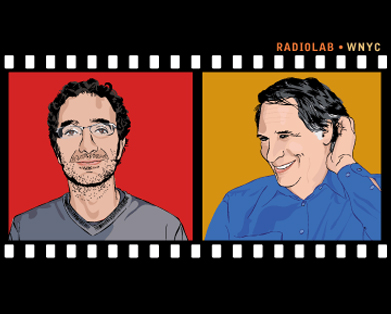
Some days I'm Jad, some days I'm Robert.

One of the first science podcasts I always mention to folks is WNYC's Radiolab. While this podcast might not always satisfy those who seek for hardcore science, the stories are always entertaining and Jad and Robert make one of the best radio teams you can listen to. Their episode "The Bad Show" displays prominently on top of the Science Studio collection.


Look at this video explaining DNA folding from the blog The Last Word On Nothing. I was so enamored by how simple and whimsical this video is while so accurately and clearly presenting a very complicated topic.


Here is a neat podcast that I had never heard of, One Species at a Time. This one is about an under-appreciated group of species: moths. This is delivered by Ari Daniel Shapiro, who you might have heard all over the radio talking about cool science.

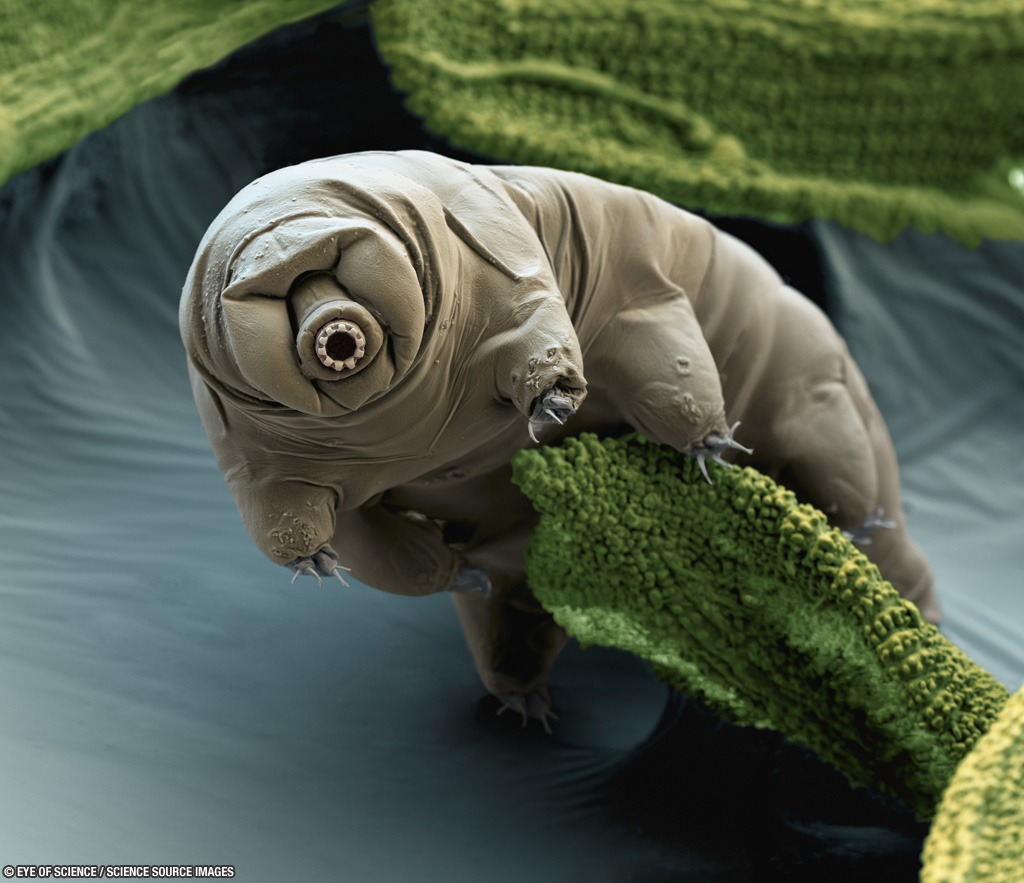
Cutest organism alive

Next, an informative and concise video about Tardigrades from the YouTube channel SciShow. I told my students that the Tardigrade is my spirit animal and they seemed impressed.

Go check the rest of the collection out for yourself and support good science media!

Friday, August 9, 2013

Field Herpetology at The Southwest Research Station (Part 3)

I had a fantastic time teaching at the Southwestern Research Station's Field Herpetology course this year. We returned to Ohio on Wednesday and definitely needed a couple of days to recover from eight straight days of hiking, teaching, and chasing after reptiles/amphibians.

I had a few more pictures of animals and class activities, so we needed a part three to finish things up.

Last beautiful day at the research station:

The students had an awesome time catching Sonora Mud Turtles (Kinosternon sonoriense) with Dr. Justin Congdon, Professor Emeritus at the University of Georgia. He's about the coolest guy you could meet.


I didn't eat it. They smell bad.

During a pit stop to meet Justin, we found two Ornate Box Turtles (Terrapene ornata):
Bad photo because I was on the phone due to my credit card information being stolen. Thanks criminals.

In between catching mud turtles, we spotted this really beautiful Greater Short-horned Lizard (Phrynosoma hernandesi):

Very photogenic.

If you take the field herpetology course, the instructors promise to wear you out and then laugh while we take photos of you asleep.


One of the most fun labs is the sprint speed lab, where students race lizards with different locomotion strategies and compare.


Sonoran Whipsnake (Coluber bilineatus):

 Chiricahua Leopard Frog after being released:

Finally, here is Matt at airport security during the trip back home to Ohio. He is a guy who is used to answering 100 questions from TSA agents regarding the safety of snake tongs (the orange and silver device under inspection in this photo):

I can't wait 'til next year. We are home for just a few days before embarking on the first annual Gibbs lab field trip to Florida, where we will be assisting labmate Sarah Smiley in catching pigmy rattlesnakes for her research.