Unisexual Ambystoma

Unisexual Ambystoma

Thursday, February 14, 2013

NPR and the progress of science crowdfunding

As I was on the way to work this morning, I heard NPR's science reporter Joe Palka doing a story about a very familiar theme: scientific crowdfunding.

The impetus for this blog was my crowdfunding campaign from last year's SciFund challenge, and has been only one example of how crowdfunding has affected my scientific career. I've had much more practice explaining why my research is interesting and important. I've learned how to incorporate principles of marketing and design into the way I present my work to other scientists and the public. The coolest perk of all? It has to be meeting people from around the world who donated to my work and have now become partners for the journey of a research project.

Christmas presents for my SciFund contributors: a photo of their adopted salamander, complete with genetic information.

And what do you know, it looks like crowdfunding might be catching on. The campaign that Joe Palka describes, uBiome, just raised over $250,000
That's gonna buy a lot of pipette tips.

I would have told you last year that it would be impossible for a science project to raise that much money. That is big time grant money. So whether a scientist is attempting a massive project like uBiome or a smaller project like mine, there are folks out there who are willing to open their wallets and support the greater scientific good. What's not to love about that?


Sunday, February 3, 2013

Hardy Kern: Parthenogenesis 101


An important component of our lab here at Ohio State is our group of undergraduate students/volunteers/researchers. Even though these students have schedules full of challenging classes, work, and other responsibilities, they still find time to help us take care of captive animals, meet once a week to talk about science, and even conduct their own research. For this blog post, one of our students, Hardy Kern, submitted an article that he wrote up about a topic that has recently captured his imagination. Here's Hardy:

Putting it plainly, I’m an animal nerd. For as long as I can remember I have been enthralled and captivated by all aspects of Kingdom Animalia and its inhabitants. Every single animal, whether cute and furry or creepy crawly, has something amazing about it; an adaptation, behavior, or physical trait which distinguish it from the rest and stop myself and fellow animal nerds in our tracks. What started as a starry eyed fascination with the natural world has become a drive to study it, taking every special adaptation or weird inconsistency into effect. Recently I have been focused on (or, truthfully, obsessed with) an amazing characteristic of reptiles which has received a lot of attention as of late: parthenogenesis

Parthenogenesis is a Greek word meaning “virgin origination.”  Basically, reproduction can happen by a female without a male intervening at all. Asexual reproduction is nothing new to most people; we know that bacteria can do it, we know it’s how our cells divide, and the more botanically inclined of us know plants can employ it as well. However, asexual reproduction in a higher level organism, like a reptile, is a big deal. It’s easy for us to imagine a minuscule bacteria or sedentary plant fertilizing itself, but for larger and more complex organisms, parthenogenesis is a phenomenon… or is it?

Partheno-whatasis? How It Works
Since that awkward birds-and-bees talk we had in middle school with our parents, we know the basics of reproduction:  

Male + Female = Offspring 

But parthenogens throw a wrench into this unflappable equation:

Female + Herself = Offspring

More or less, she clones herself. When an organism is preparing to breed, it first needs to make gametes. The female duplicates her genetic material during mitosis, doubling the original amount, resulting in a diploid cell which separates into two cells: the original and its copy. Meiosis then kicks in to actually make the eggs she’ll use; each of the two cells divide, creating four haploid cells, where each of the four cells contains all of her genetic information, but only half as much needed to manifest a new organism. 

These four cells are called polar bodies (above, orange ovals). In regular reproduction, one of them, the oocyte(1), will go on to become the egg and await fertilization from the male’s sperm cell (black oval). Sperm + Egg = Enough genetic material to constitute an offspring. Take the male out of the picture and you have a lonely, childless female… unless she’s parthenogenetic. For parthenogens, there’s a shortcut which removes the male entirely.  One of the female’s other polar bodies (2,3,4) will merge with the oocyte (called automixis), giving it enough genetic material to make a new organism.  Thus is born our parthenogenetic offspring.

Why is this the only result when you Google image search cloning?
Another way reptiles can reproduce parthenogenetically is through cloning, a process whereby an egg inside a female simply makes a copy of its own genetic information, allowing for enough genetic information to constitute an offspring. This cloning is not the same as artificial cloning, however, for the offspring are not always an exact copy of their parent. It is speculated that some parthenogenetic reptiles come from hybridization between two species which share adjacent habitats. Through a recognized but poorly understood process, a male and female lizard of two similar but not identical species will breed and produce an offspring with genetic information from both species. These individuals will have two complete sets of chromosomes, and are thus known as polyploid individuals. This offspring harbors the ability to reproduce asexually, but still incorporate some variation into its own progeny.   

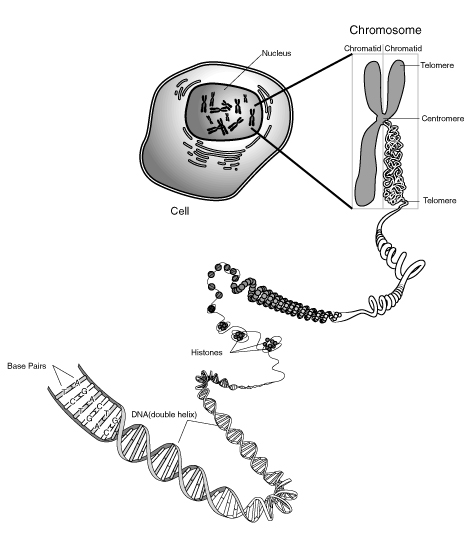
Cells, Chromosomes, DNA: how they fit together.
Another factor which helps reptiles reproduce asexually comes from their sex chromosome assignments. In humans, and all other mammals, males have the XY chromosome combination (heterozygous), and females the XX (homozygous). In reptiles, this is switched.  Females are the heterozygous sex, WZ, and males are the homozygous sex, ZZ. Why is this important? For an organism to be parthenogenetic, its offspring must be able to reproduce without the intervening of a male. Seeing as only females are able to give birth, they are the more valuable gender to “make” in a parthenogenetic species. When the chromosomes separate during meiosis, there are two polar bodies with the “W” designation, and two with the “Z” designation. Speaking to probability, it is more likely that a WZ combination will be made than either a ZZ (male) or WW (nonviable) combination. As females have both the W and Z designations intrinsically, they can easily make more females.

What Good Is It?
Sexual reproduction has its obvious advantages, namely the chromosome shuffling which leads to genetic variation within individuals. When environmental conditions change, the easiest way for an organism to successfully adapt is to have mutated genes which may create an individual better suited for the new environment. Asexually reproducing organisms do not, for the most part, experience any sort of genetic recombination; what you see is what you get. An offspring will have the same genetic makeup as its parents. So, why keep it around?
Asexual whiptail lizard in Arizona. Photo by Rob Denton.
For one thing, being a non-recombinant individual can be advantageous. If an organism is well adapted for one environment, having offspring which are equally as well adapted will ensure the progeny’s survival. The babies are born into a world they are perfectly suited for, all because their mother was. Parthenogenetic individuals also experience less competition for resources. In a sexually reproducing species, it can be assumed that both males and females of that species will require the same resources to self-sustain. This can create a natural battle of the sexes, as one gender needs to feed, clean, house, and move itself just as much as the other does.  With no males in a species, parthenogens have the advantage of decreased resource competition; a whole sector of potential dinner-stealers is virtually eliminated.

The most successful cases of parthenogens are typically species which are facultative. Facultative parthenogens are species which can reproduce either sexually or asexually depending on the circumstance. This method of reproduction is ideal for a species which lives in an unstable or developing habitat, or which has much opportunity for habitat expansion. Though asexual reproduction is largely an unconscious decision by the species in question, certain environmental pressures can trigger either reproductive process.


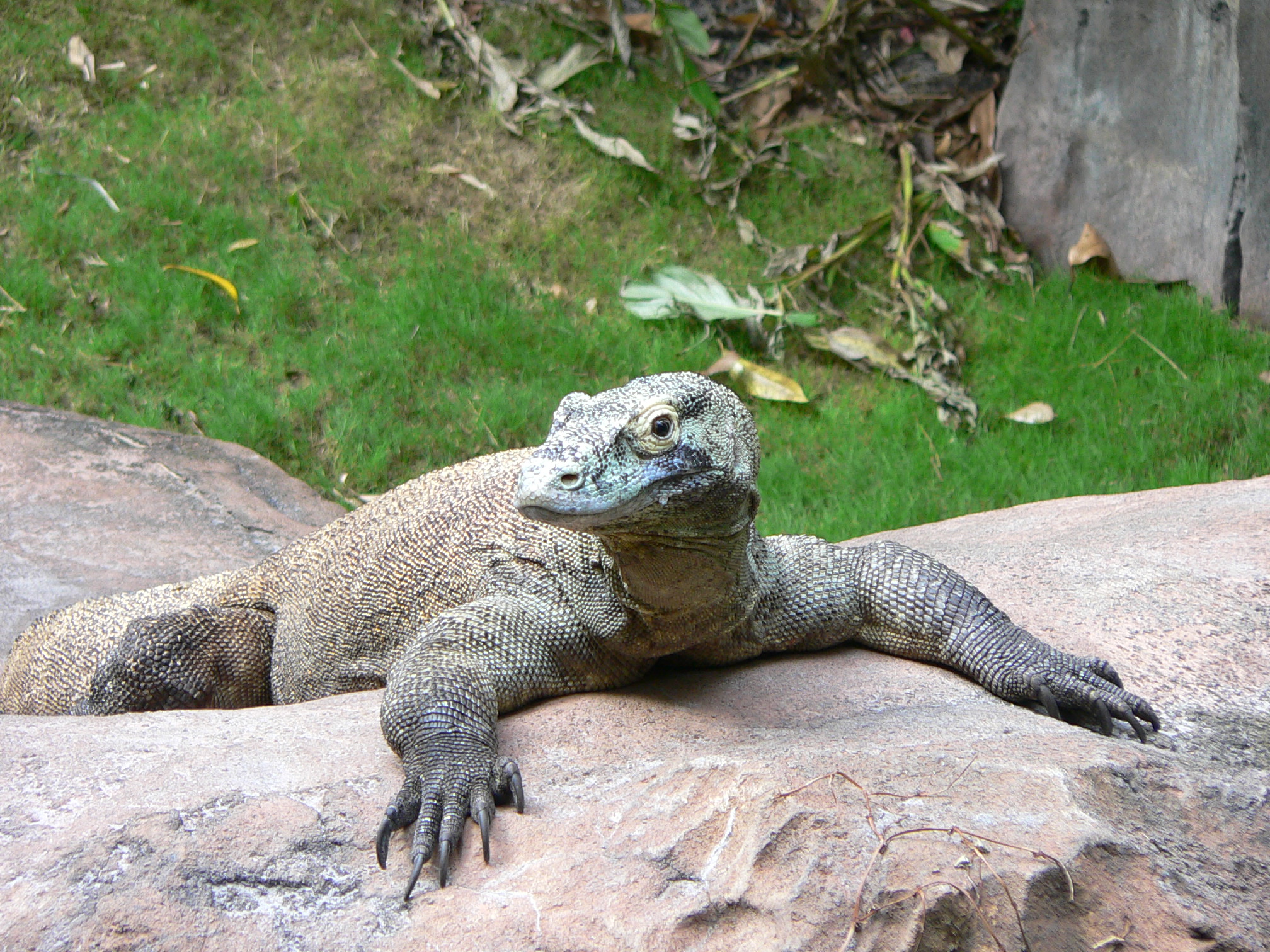
Komodo dragons (Varanus komodoensi) provide an excellent example of a reptilian facultative parthenogen (try saying that 5 times fast). The prevalent method of reproduction is sexual; males and females are able to mate and produce offspring whose genes are a jumble of both of the parents. The habitat of Komodos is made up of a series of islands. If a female dragon successfully swims to a new, uninhabited island where there are plentiful resources, her body will know this is an ideal place to raise young.  With no males around to mate with her, her inherent asexual superpower kicks in, and she lays a clutch of eggs. Because female reptiles have both the male and female sex chromosomes, she is able to lay male eggs. Once these males grow and become sexually mature, they can mate with their mother (whose pendulum will swing back to the regular reproduction side) and found a sexual population of dragons on the new island. Virgin Komodo births have occurred in two zoos in the United Kingdom, and quite possibly several times in the United States as well.   

The obvious downside to exclusive parthenogenetic reproduction is a lack of variation. When a species becomes extremely specialized for its environment, even the smallest of changes can disrupt the entire population.  For this reason, males become extremely hot commodities in facultative parthenogenetic populations. In species whose environment is largely unstable, only females are produced.  These parthenogenetic females can create multitudes more of females with no genetic cost to the species; if 10 females with the same DNA go out into an unstable environment and 5 of them do not live to reproduce, no genetic information has been lost from the pool.  It is preserved in the other identical females. Only when an environment has stabilized will males begin to appear and stay – the genetic variation they provide is too valuable to risk otherwise.

Is Parthenogenesis Common?
So far, parthenogenesis has been confirmed in roughly 70 vertebrate species, most of them reptilian.  It has been observed in pythons, rattlesnakes, monitor lizards, rock lizards, whiptail lizards, and dozens of others. Most recently it was confirmed that a wild female copperhead, Agkistrodon contortrix, reproduced parthenogenetically – the first observation for that species. Her successful litter of wriggling young snakes posits and interesting question: just how common is parthenogenesis? It is entirely possible that it has been an extremely natural and normal process for millions of years, but is just now getting our attention. With the wide range of reptiles the process has been seen in, it is understandable to think that it is common in many more species than just those which have been extensively studied. There are even some non-reptilian parthenogens out there; chickens and turkeys in large scale poultry farms have been known to occasionally produce viable offspring without ever being in contact with a male.
Copperhead from Daniel Boone National Forest, Kentucky. Photo by Rob Denton
While we may still be getting our feet wet in the genetic pool comprised of parthenogens, one thing is entirely certain: there are always new and amazing things to be found in nature. As an avid animal fanatic, I for one can’t wait to see what other secrets reptiles, and all other creatures, have in store for us.


Until next time,

Hardy Kern

Wednesday, December 19, 2012

Get to Know a Grad Student: Chris Thawley


Our last PhD student for "Get to Know a Grad Student" is Chris Thawley from Penn State University. Chris is currently a member of Dr. Tracy Langkilde's lab at PSU, but I met him while he was a Masters student at the University of Alabama with Dr. Leslie Rissler 
Chris Thawley in a shirt that was surely made by AND1.

Here is what Chris thinks about his grad school experience:


What kind of research do you do? Please give the scientific version and the non-scientist version.
Less-scientific version: Broadly, I study how species adapt when their environment (habitat, other species, climate) changes around them. Specifically, I investigate how a common lizard, the Eastern Fence Lizard, has adapted to the presence of an invasive species, the red imported fire ant. We already know that lizards in areas that have been invaded by fire ants for up to 70 years have chan
ged both their behaviors and morphology. I am currently studying how fire ants affect lizards, whether directly by killing/eating them, or indirectly, by changing their behaviors, diet, stress levels, etc. I hope to be able to construct mathematical models describing how the lizards change and to look at how these changes may be passed on to future lizard generations.

More-scientific version: My research is focused on evolutionary ecology and invasion ecology. I study how anthropogenic environmental change, including introductions of non-native species, imposes novel selective pressures on native species. A population’s ability to persist under these threats can depend on its capacity to adapt accordingly. However, responses to an altered fitness landscape may not be optimal across all environments or life stages. My work is a part of a broad research program to examine how fire ant presence can cause rapid adaptation in fence lizard populations. Specifically, I am examining how direct pressures, such as predation, and indirect pressures, including alterations in diet, behavior, stress, and immune function, may affect lizard populations differently based on historical association with fire ants and across ontogeny. Hopefully, studying the downstream effects of pressures imposed by invasive species can provide broader insights into the longer-term consequences of environmental change on community interactions and the persistence of biodiversity.


Why is what you study important?
Whew, well, my answer to this falls into three parts. 1) I think that capital-E ecology is important because we need to have an understanding of how our planet works. I believe that one of the main challenges of humanity in the next century is going to be figuring out how to support a growing human population with a reasonable standard of living while protecting the ways in which the Earth functions and preserving the natural heritage of the planet. To do this, we need to study ecology.

2) My specific fields of study, evolutionary ecology and invasion biology, are important pieces of what I described above. Because many natural environments are changing very rapidly, whether because of human development, climate change, invasive species, etc, species, communities, and whole ecosystems are being forced to adapt to this change on unprecedented scales. Learning how and even if these species can respond is a critical question that can shed light on past biology (how current biology developed) and future systems. Research in these fields can also help us answer some of the questions we'll need to solve the big questions (above) like how to effectively conserve nature in the face of increasing development.

3) I think my research is important because it's a pretty visible, charismatic, and fairly easily understandable example of how rapid change can result in rapid evolution. It's a great tool in education and outreach to have a system that uses cool animals (lizards), a species people love to hate (fire ants, even though they're cool too), and rapid evolution together; people ask really great questions about the research, and it opens a doorway to talking with them about many other scientific topics (I've had people with beers in hand ignore football games to talk to me about lizards/ants...pretty awesome). 


Capital-E ecology on Tatooine
What was your path to graduate school like?
My path to graduate school was the proverbial long-and-winding-road. After graduating from undergrad, I moved to California (with an aching in my heart) and worked as a postal clerk, busboy, and handyman. I later took up residence in Madrid, working illegally as an English teacher, taught middle school science at a small Quaker school outside of DC for a year, and did a year of service with AmeriCorps. At this point, I returned to the Ecology fold as a research tech in the herpetology lab at the Joseph W. Jones Ecological Research Center. From there, I went on to a Masters program in Biological Sciences at the University of Alabama, and then directly to my current doctoral program in Ecology at Penn State.

While this "career progression" was certainly the long way around, I feel that my years spent outside academia have been very valuable. I learned to be self-reliant (a trait I did not have during my undergraduate years). I gained a great deal of experience teaching a diversity of people, from small children to the elderly, and those with no background in the subject matter to relatively expert students. This has given me a passion for teaching, a desire and ability to reach a diverse audience, and an appreciation of the impact that good teaching can have. I also experienced several different modes in which conservation actually happens: as a volunteer, I often did the grunt work of conservation projects (removing invasive species with chainsaws, carrying stranded marine mammals, etc.) and helped coordinate conservation projects at the local government scale. As a research tech on a private ecological center, I participated in research outside of the typical academic framework. These experiences have given me a much broader view of what effective teaching and research can be.  


What do you enjoy doing in your free time? How do you feel about your work-life balance?
I feel like I am an incredibly stereotypical ecology grad student in how I spend my free time. I love reading, cooking, sampling great beers, being outside (hiking, taking pictures, herping), and complaining about being a grad student, all while wearing zip-off field pants, Columbia button-down shirts, and Vasque trailrunning shoes. I also nap when I can. 

Re-creation of Chris and other grad students just "hanging out"
I generally like my work-life balance. Of course there are times (right now) when the workload is very heavy, and 14 hr days become standard. However, I love the freedom I have as a grad student to set my own hours and do things as I see best (as long as the work gets done well). I also love having field work and a balance between being hot/cold, parched/soaked/muddy, and stuck in an office behind a computer. The freedom of schedule and the variety in the balance between my work and my life are one of the major attractions to working in my field.  

Describe a normal day in your life.
A normal day in my life depends greatly on whether I'm at school or in the field. If at school the day's start involves my alarm clock going off at 7:30, 15 minutes fumbling with the coffee grinder and boiling water, and a 10 min bike ride to my office. I spend my day answering (or deleting) the ludicrous numbers of emails I get, reading articles, doing homework (yes I still have classes...), and analyzing/writing/preparing to present the previous summer's research. I try to intersperse the day with fun and random tasks, like taking care of my lizards in the basement animal room, attending a friend's defense, or heading to a lunch seminar. In the evening, I chill, cook dinner, relax for a bit and then often head back to the lab to read or watch soccer while processing data or something. Some nights, I go to trivia with fellow grad students.

What are your career plans for the future?
I hope to be a professor at a smaller liberal arts school where both teaching and research are valued. 


What has surprised you about graduate school?
Hmmm, not much has surprised me. I guess I am sometimes surprised by how much my advisors trust me to operate independently and as an adult (I still don't feel like a grown-up all the time).  


What do you struggle with the most in graduate school?
When I started grad school, I struggled most with two things: The first was budgeting my time effectively. It was intimidating and a bit confusing to have a well-defined end goal (getting a degree and successful research) and very few definite waypoints. I think struggling through the whole research process for the first time was very valuable though; I learned how to educate myself, choose an area of research, define a project, get it funded, and see it through to completion. The second area of difficulty was adjusting my expectations about the breadth and depth of knowledge needed. In undergrad it was relatively easy to learn everything in a class and the edge of the necessary knowledge was neatly delineated by the bounds of textbooks, syllabi, and lab manuals. As a grad student feeling my way through my chosen field, there are so many different directions to go and rabbit holes to head down. I could spend my entire lifetime reading and still find just one more interesting paper to get excited about and read. Learning to make choices about what to learn and curate my own knowledge has been a challenge (and one I'm not entirely successful in), but the realization that I can't try to learn about everything interesting has been a hard fought one. 


This is the stock photo result when you search "excited scientist"


What has been the best moment of your career so far?
Nothing really pops out. I have vague recollections of late nights spent with R and seeing a p-value of 0.025 and running around the lab with my arms over my head.


How do you feel about the dynamic of research, teaching, and outreach in your career and in the future?
I really like the combination of research, teaching, and outreach as a grad student and in the future (as an aspiring professor). I see all three of these as complementary and intertwined. I don't know of another job in which a) you have the opportunity to do all three of these on a regular basis and b) in which they support each other so well. I see the combination of these three arenas as a key part of the push towards more integrative science and as critical to fostering scientific literacy and education in the United States (and heck, the rest of the world too).


Who are your academic role models?
I don't have a very interesting answer for this. I guess my previous advisors. And Mike Dorcas (whose lab I worked in as an undergrad). I'd arm-wrestle a Wookiee for his job. 

Dr. Mike Dorcas (pictured here) actually had to wrestle a burmese python for his current job, so the wookiee are-wrestling has precedent.

What advice do you have for other aspiring grad students in your field?
Don't go to grad school just because you don't have anything better to do.

Do go to grad school because a) you know what you want out of it, and you're going to get it no matter what or b) because you can't imagine there being anything else you want to do with the rest of your life. 


Thanks so much to Chris for giving some great answers to my questions. 

'til next time 

Friday, November 30, 2012

SciFund Round 3: Jenn Hellmann

The SciFund challenge, a crowd funding experiment for science, is once again going strong this year. Since this blog started with my own SciFund campaign, it is only fitting that I use it to promote some of the fascinating research done by other students.

This funding cycle, there are three other students in my department at Ohio State who are sharing their science with the world and looking for members of the public to participate with them. One of these students in Jenn Hellman
Jenn looking for fish in all the wrong places.
Jenn's research centers around social networks in animals. Particularly, she observes the behavior of African Cichlid fish to better understand the interactions between individuals and groups. Why is this important? These relationships are complex, and the effects of how animals interact in a social network has massive influences on their evolution and ecology. 

Jenn is planning to use donation to fund an expedition to Lake Tanganyika, in East Africa, where she will be able to observe these animals in the wild. 


As part of her campaign, Jenn answered some questions about what she does, why she does it, and what makes her tick:

Tell us about yourself, where you are from, and where you see yourself going.
I'm a second year graduate student at The Ohio State University. I'm originally from Philadelphia, and I did my undergraduate at Messiah College. I took a year off before graduate school to work with kids and to travel, but I came to graduate school last year and I love it. I love being paid to do research and teach, and working in an environment where everyone is here to learn. Because of that, I would love to be able to work as a faculty member at a university eventually. 


Graduate student multitasking at its best.
How did you get involved in your research project?
I came to graduate school knowing that I wanted to do fish behavior, but I didn't know much more than that. I actually got into social networking by reading some of primate literature for a class. The article talked about how certain individuals in the group are responsible for maintaining group stability, and when you remove those individuals, the group gets really aggressive. Later, I was reading some articles about intergroup movement in colonies, and it just struck me that social networking is probably really important in this species too. Since some individuals have many more opportunities to interact with their peers than others, that probably has pretty significant effects on the decisions that they make. 

Why is your research important to you? Why should others fund it?
I think that sociality in general is fascinating and relevant. So many different species, from ants to humans, have evolved extremely complex social systems. Exploring the benefits of social networking can help us compare social systems between species and help us understand why they are so different. Why do ants live in huge colonies with one queen and many helpers, versus fish that cooperatively breed, versus primates that raise their offspring in groups? In all of these types of organisms, their social system is key to their survival and without it, they would not be successful in their environment. 


Exploring social networking is one of the best ways to understand social systems.  It tells us a lot about species: how they find mates, how they maintain social stability, and which individuals are most important in a group. It helps us understand how evolutionary pressures have caused species to adapt a certain way of living, and we can use this information for many things, such as improving conservation plans, anticipating how species will react to disturbances, and tracking the spread of diseases.

Do you have a favorite story that came from working on your research project?
I've had to learn how to SCUBA dive for this trip. The first practice dive that we took as a research group, I was using someone else's equipment and so my BCD (the vest that controls your buoyancy) was too big and the weights around my waist were too heavy. I spent about twenty minutes bobbing up and down between the surface and the bottom of the lake before I got out and fixed it. It was not my best practice dive! 

Why did you decide to particpate in the SciFund Challenge?
The purpose of SciFund is two-fold. First and most importantly, I want people to understand how science applies to their lives. There are all types of research happening that people don't know about and may not care about. I hope that SciFund can at least show people what type of research is out there, and make people interested in it. I think a lot of people see science as this unapproachable and hard-to-understand topic, but it's not if it presented in an understandable way. Second, I want to raise money to help fund my field season to Africa. My research is much more suited for field work than laboratory work (because of space constraints in the lab), but it's expensive to travel to Africa and I need some help!

What was the most difficult aspect of building your SciFund Proposal? What was your favorite? 
The most difficult was definitely the video. I also had to sit outside in 30 degree weather filming without a coat for about an hour, and then couldn't use the footage because of all the background noise. I've never done a video before (ironically, my brother was a film and sound production major), and I'm just lucky that there are programs out there that can help anyone make a movie. The best part was figuring out how to explain my project to the more general population, because it gave me the opportunity to really think about how it is so related to what we see in human society, even though they are 'just' fish. 


Tell us something random. Something funny. Something borrowed. Something blue.
Something random... okay, well a 'Philly cheesesteak' is not actually a Philly cheesesteak unless you are in Philly. You can call it a cheesesteak, but they are definitely not the same and not as good. Anyone from Philly will tell you that!

If you would like to donate to Jenn's SciFund campaign (I did!), go here.

Monday, November 19, 2012

Get to Know a Grad Student: Juli Goldenberg


Next up for Get to Know a Grad Student: Juli Goldenberg, Masters student at San Diego State University
Juli in her native environment. She is demonstrating the extremely difficult "No-look pipette transfer".


What kind of research do you do? Please give the scientific version and the non-scientist version.

(science-y version)
The broad goal of my research is to improve coalescent-based methods of multilocus species tree inference and species delimitation. Specifically, my project focuses on elucidating the species limits and phylogenetic relationships within the Western Rattlesnake (Crotalus viridis) species complex - a wide-ranging group of rattlesnakes that currently contains three recognized species and nine subspecies.

(non-science-y version)
My research focuses on elucidating the evolutionary history of the widest-ranging group of venomous reptile in North America, the members of the Western Rattlesnake species complex. Using genetic data, I am trying to determine where the species limits lie within this group, and I will be using these new species groupings to reconstruct the species tree of the complex.
A western rattlesnake (Crotalus viridis) found while night driving in Arizona this summer.

Why is what you study important?

Evolutionary biology lies at the root of every biological science. I love observing the genetics and population genetics that underlie speciation because it is here that we observe the union of micro- and macro-evolutionary processes. I never lose my sense of amazement while working at this fundamental intersection!

Also, rattlesnakes are definitely the coolest study taxon.

Looks rough.

What was your path to graduate school like?

I first found that I wanted to attend graduate school through an education abroad program through UC Berkeley. During the first semester of my junior year of college, I had the opportunity to attend a field-based marine biology and terrestrial ecology program in Queensland,Australia. After exploring Queensland from the outback to the Great Barrier Reef, I was hooked on pursuing biology as a career. Upon my return to Berkeley, I spent the remainder of my undergraduate tenure assisting in a herpetology and evolutionary genetics lab, which cemented my desire to study evolutionary biology.

What do you enjoy doing in your free time? How do you feel about your work-life balance?

My number one hobby is brewing beer. You can follow all of my homebrewing adventures at brewbunny.wordpress.com (yep, shameless plug for my blog). Aside from that, I love exploring the outdoors - especially the beautiful Southern California deserts.

I am lucky enough to be studying what I love, so striking a balance between work and free time is effortless. I never feel like my work is a chore.

If you touch your chin, you may contaminate DNA samples

Describe a normal day in your life.

A normal day for me usually consists of balancing lab work, reading, writing, various journal and lab meetings, seminars, helping out my fellow students as much as I can, and constant data analysis. In addition, twice a week I teach the night class for human anatomy. After work I usually have some sort of social activity set up, be it craft night, game night, or just grabbing a beer with some buddies.


What are your career plans for the future?

I’m currently in the last year of my masters at San DiegoState University. After I complete my degree, I plan to continue on to a PhD and eventually devote my career to evolutionary biology research, hopefully remaining in academia.


What has surprised you about graduate school?

I have been most surprised by how much I have learned that is not related directly to my research. I anticipated that my thesis would be central to my educational experiences during graduate school. Rather, I have learned more from coursework, teaching, seminars, and my fellow students than from anything else. This eye-opening and integrative perspective has dramatically changed my outlook on biology.


What do you struggle with the most in graduate school?

It was very difficult to find a balance among all of the seemingly disparate tasks required by graduate school. The first semester was definitely the most difficult for me because of this. Once I got settled in to graduate school, though, the work became a lot more fun.
 
What has been the best moment of your career so far?

The best moment of my career so far has definitely been giving my first oral presentation at a major international meeting. This past summer, I had the opportunity to present my research at the World Congress of Herpetology in Vancouver, BC, Canada. Although I was absolutely terrified at first, I ended up feeling so proud of my research, and the collaborative networking that resulted from the presentation was invaluable to my project.


How do you feel about the dynamic of research, teaching, and outreach in your career and in the future?

Integration of research, teaching, and outreach is essential to furthering any scientific field. Because of this, I have consistently maintained a volunteer relationship with natural history museums throughout my academic career, having volunteered at the Museum of Vertebrate Zoology in Berkeley during my undergraduate education, the California Academy of Sciences in San Francisco during my “year off”, and now the San Diego Natural History Museum. Research cannot persist without maintained public education and community outreach.

 Who are your academic role models?
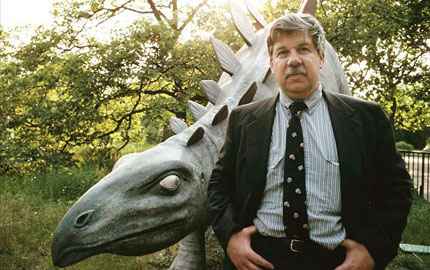
Dr. Stephen J. Gould with his pet stegosaurus (credit: famousscientists.org)

What advice do you have for other aspiring grad students in your field?

If you are interested in pursuing a career in evolutionary biology, I think that the two most important steps you can take are talking to researchers currently involved in evolutionary research, and chronologically reading the “classics” of evolutionary thought (which is an incredibly fun pursuit!).


Thanks Juli! Next time we will have Chris Thawley, PhD student at Penn State University.